








What Is AI Governance and Why Australian Governments Are Prioritising It in 2026
Artificial intelligence is no longer experimental within Australian government and large enterprises. AI systems now influence public service delivery, compliance decisions, risk assessments, and citizen outcomes across federal, state, and local agencies. As adoption increases, scrutiny has intensified. In 2026, governments are no longer asking whether AI should be governed, they are demanding demonstrable governance practices to ensure AI systems are safe, ethical, reliable, and fit for purpose.
This shift has placed AI governance consulting firmly on the agenda for public sector agencies and regulated industries. For test analysts, test managers, QA leads, and senior quality practitioners, AI governance represents both a natural evolution of quality responsibilities and a significant expansion of scope beyond traditional software testing.
This article explains what AI governance entails, how it differs from conventional QA, and why Australian governments are mandating it in 2026.
What Is AI Governance?
AI governance is the structured and independent oversight of AI systems to ensure they operate as intended, comply with regulatory and ethical requirements, and effectively manage risk throughout their lifecycle.
Unlike traditional applications, AI systems are often probabilistic, adaptive, and highly dependent on data. They may continue learning after deployment, influence decisions with real-world consequences, and produce outcomes that are difficult to explain using conventional testing methods. AI governance consulting addresses these challenges by integrating quality engineering, risk management, compliance, and ethical oversight into a cohesive framework.
Key areas of focus in AI governance include:
- Technical robustness and system reliability
- Data quality, integrity, and representativeness
- Bias, fairness, and ethical behavior
- Transparency and explainability of decisions
- Continuous monitoring and accountability
For QA managers and test leads, AI governance extends responsibilities beyond functionality to outcomes, trust, and regulatory alignment.
Why Traditional Testing Is Not Enough for AI Systems
Traditional testing practices assume deterministic systems, where the same input reliably produces the same output. AI systems do not behave this way. Machine learning models operate on probability, patterns, and inference, meaning outcomes may vary depending on context, data quality, or model drift over time.
Conventional QA also struggles with model opacity. Many AI models, particularly deep learning systems, cannot easily explain how decisions are reached, complicating defect analysis, root-cause investigation, and regulatory justification.
AI systems are also deeply dependent on data. Training data, feature selection, and ongoing data feeds directly influence behaviour. If bias or quality issues exist, traditional functional testing alone cannot detect them. Modern AI governance fills this gap by applying oversight controls across data, models, and operational use, not just application logic.
Why Governments Are Demanding AI Governance in 2026
In 2026, AI systems are embedded in areas such as welfare eligibility, fraud detection, health prioritisation, border security, and infrastructure management. The consequences of failure are no longer limited to technical defects, they include legal, ethical, and societal harm.
Protecting Public Trust and Service Integrity
Public trust is fundamental to government service delivery. When AI systems produce biased, opaque, or unjust outcomes, confidence in public institutions erodes rapidly. Australian governments increasingly expect agencies to demonstrate that AI-driven decisions are fair, explainable, and defensible.
AI governance consulting enables agencies to produce evidence that risks have been identified and mitigated, bias and fairness have been assessed, and human oversight mechanisms exist. For testing and QA leaders, this positions governance as a safeguard for trust rather than a purely technical exercise.
Meeting Australian Regulatory and Ethical Expectations
Australia’s AI governance landscape has matured significantly. In 2026, agencies are expected to actively demonstrate compliance with frameworks such as the Australian AI Ethics Principles, APS digital and data standards, and sector-specific regulatory obligations.
Rather than treating ethics as abstract guidance, AI governance translates principles into assessable and testable controls. Consulting embeds ethical validation, traceability, and documentation into delivery and operational processes.
This elevates the responsibilities of QA and testing leaders, who now validate not only functionality but also regulatory and ethical alignment.
Increased Accountability, Audit, and Oversight
Government use of AI is subject to audit, parliamentary review, and public scrutiny. Agencies must explain why AI systems were chosen, how risks were assessed, what oversight occurred, and how ongoing performance is monitored.
Effective AI governance creates a defensible audit trail. Through independent assessment, reporting, and continuous monitoring, consulting supports accountability at an organisational level. For directors and senior technology leaders, this reduces legal, reputational, and operational risk.
As AI governance moves from concept to operational reality across Australian government, local councils are a key part of the story. Many local authorities are already deploying AI in service delivery and infrastructure, yet struggle to embed formal governance and oversight frameworks as adoption accelerates. For a practical look at how local government organisations are navigating this shift, and why early governance is critical to balancing innovation with accountability, see KJR’s insights in “What Local Governments Must Know About AI Governance.”
What Does AI Governance Consulting Involve?
Governance is not a one-off assessment. It is a structured set of activities applied across the AI lifecycle.
Risk and Governance Assessment
AI governance begins by evaluating organisational structures and risk ownership. This includes assessing whether accountability for AI decisions is clearly defined, whether AI risks are integrated into enterprise risk frameworks, and whether thresholds for human intervention exist.
For test managers and QA leads, this clarifies how quality responsibilities intersect with enterprise governance and risk management.
Data Quality and Bias Oversight
Because AI behaviour is data-driven, governance must address data quality, representativeness, and ethical use. Consulting examines how data is sourced, prepared, maintained, and monitored for bias.
This work often involves collaboration between testers, data teams, privacy specialists, and governance stakeholders. It extends traditional validation into fairness testing, drift detection, and ethical risk management.
Model Validation and Oversight
Model governance ensures AI models perform reliably under real-world conditions. This includes validating accuracy, stress testing edge cases, and assessing resilience to unexpected or adversarial inputs.
Where possible, oversight also evaluates explainability, ensuring model behaviour is understandable for regulatory and operational decision-making.
Ethical and Responsible AI Practices
Ethical oversight assesses whether AI systems operate in line with responsible AI principles. This includes fairness across user groups, transparency of decisions, and meaningful human oversight.
In Australia, this directly supports alignment with government ethics principles and public accountability expectations.
Continuous Monitoring and Ongoing Governance
Unlike traditional systems, AI requires ongoing governance after deployment. Continuous monitoring tracks performance, bias, and drift, ensuring models remain fit for purpose as conditions change.
This lifecycle-based approach is why governments are investing in AI governance consulting rather than relying solely on pre-deployment testing.
The Role of Testing and QA Professionals in AI Governance
AI governance is inherently multidisciplinary, but testing and QA professionals play a central role.
Test analysts now focus on scenario-based and risk-based validation rather than fixed assertions. Test managers and QA leads are responsible for embedding governance practices into delivery frameworks, ensuring traceability from policy and ethics to evidence of outcomes.
For senior practitioners in quality engineering and digital delivery, AI governance represents a natural evolution, from validating systems to assuring decisions, outcomes, and organisational accountability.
The emphasis on robust AI governance extends beyond policy into practice. Simply articulating ethical principles isn’t enough, trust in AI systems depends on demonstrable evidence that governance and quality controls are actively applied across the AI lifecycle. To explore how trusted AI adoption intersects with governance, risk, testing, and ongoing validation in a way that goes beyond buzzwords, check out “What Trusted AI Adoption Really Means; Beyond Buzzwords.”
Why AI Governance Consulting Matters for Australian Government Agencies
In 2026, structured AI governance is no longer optional for Australian government agencies and regulated public-sector environments. Departments without robust governance risk regulatory non-compliance, adverse audit findings, and erosion of public trust in automated decision-making.
Consulting enables agencies to embed oversight early, scale it across multiple AI initiatives, and maintain alignment with Australian regulatory, ethical, and public-sector governance frameworks. For QA and testing leaders, it positions governance as a strategic capability rather than a one-off checkpoint.
Speak with KJR to integrate AI governance into your quality engineering and delivery practices.
Frequently Asked Questions (FAQs)
A specialised service evaluating AI systems for reliability, fairness, transparency, and regulatory compliance across the lifecycle. It combines testing, governance, risk management, and ethical oversight.
Traditional QA focuses on deterministic behaviour and functional correctness. AI governance addresses probabilistic outcomes, data-driven behaviour, bias, explainability, and ongoing model performance.
Governments require it to protect public trust, meet regulatory and ethical obligations, and ensure accountability for AI-driven decisions affecting citizens and critical services.
Oversight is shared across delivery, governance, and risk functions. Testing and QA leaders play a critical role in designing, executing, and evidencing governance activities.
From early design and data selection, continuing through deployment and operation with ongoing monitoring and reassessment.
No. While government demand is rising, it is equally relevant to regulated industries such as finance, health, utilities, and critical infrastructure.
- Case Studies

AI agent pilot for Australia’s leading integrated resort
Read how KJR developed and piloted an AI agent for Australia’s leading integrated resort, improving agility and validating AI’s business integration potential.

Datarwe
Datarwe is a data platform start-up that focuses on the ways in which AI and machine learning (ai-ml) can be applied to data and used to solve real-world problems. Currently, Datarwe’s focus is on long-term data collection from individuals in Intensive Care Units (ICU).
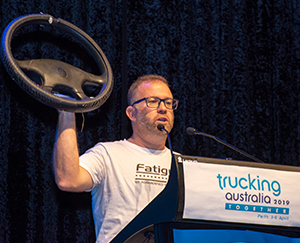
FatigueM8
Using AI and ML technologies applied to both health and driving data, KJR has developed a secure dashboard that can warn drivers and their companies of pending health and fatigue issues.