







AI Model Drift Explained: How Assurance Helps Maintain Accuracy Over Time?
As Artificial Intelligence systems move from experimentation into production across Australian organisations, a new risk is emerging; AI model drift.
For Test Managers, QA Leads, and senior Quality Engineering practitioners, drift isn’t theoretical. It directly affects system reliability, compliance, fairness, and business trust.
This is where AI Assurance becomes critical.
Unlike traditional model validation at deployment, AI Assurance ensures AI systems remain accurate, explainable, compliant, and trustworthy over time, especially in dynamic Australian regulatory and operational environments.
What Is AI Model Drift?
AI model drift occurs when a machine learning model’s performance degrades because real-world data changes over time.
There are two primary types:
1. Data Drift
The statistical properties of input data change.
Example:
A credit risk model trained on pre-pandemic data behaves differently when consumer spending patterns shift.
2. Concept Drift
The relationship between inputs and outputs changes.
Example:
Fraud detection patterns evolve as attackers adapt to detection mechanisms.
In production environments, especially across regulated Australian industries, even minor drift can introduce:
- Reduced prediction accuracy
- Undetected bias
- Compliance risks
- Customer trust erosion
- Operational failures
Without structured oversight, drift accumulates silently.
This is precisely why AI Assurance is becoming essential across Australia’s technology landscape.
To build hands‑on capability in testing and evaluating AI systems, explore our Practical AI Assurance Workshop, designed for QA leaders, Test Managers, and senior engineering practitioners.
Why Traditional Testing Is Not Enough?
Senior testing professionals already understand system validation. However, AI systems behave differently from deterministic systems.
Traditional QA focuses on:
- Functional correctness
- Regression stability
- Performance thresholds
- Security vulnerabilities
For a deeper look at why ongoing oversight is critical for reliable AI systems, read our insights on the importance of AI assurance in ensuring trustworthy AI.
But AI systems introduce probabilistic behaviour and ongoing learning dynamics.
Once deployed, AI models:
- Interact with live, changing data
- May retrain periodically
- Are influenced by feedback loops
- Can amplify hidden bias over time
For Test Analysts and QA Managers, this creates a new challenge:
How do you test something that keeps evolving?
This is where AI Assurance extends beyond conventional testing frameworks. It introduces structured governance, monitoring, and lifecycle validation tailored to AI systems.
In healthcare, even small shifts in patient demographics or clinical data can cause diagnostic models to drift, making continuous assurance essential for maintaining safe and reliable outcomes.
The Hidden Risk: Drift and Regulatory Exposure in Australia
Australian organisations operate under increasing scrutiny around data use and AI ethics.
Key considerations include:
- Privacy obligations under the Privacy Act
- APRA expectations in financial services
- Emerging AI governance frameworks
- Heightened public expectations for transparency
Unchecked model drift can lead to:
- Biased decision-making
- Unfair credit or insurance outcomes
- Non-compliant automated decisions
- Breaches of governance policies
AI Assurance provides ongoing verification that models remain aligned with regulatory, ethical, and operational requirements.
For Directors and CIOs, this is no longer optional risk mitigation, it is operational resilience.
How AI Assurance Maintains Model Accuracy Over Time
AI Assurance introduces a lifecycle-based oversight model that includes:
1. Baseline Performance Benchmarking
Establishing clear metrics at deployment:
- Accuracy
- Precision/recall
- Bias indicators
- Stability thresholds
This provides a measurable reference point for drift detection.
2. Continuous Monitoring Frameworks
Rather than periodic testing, AI systems require continuous validation:
- Statistical distribution monitoring
- Input data quality checks
- Output consistency validation
- Real-time alert thresholds
This transforms AI assurance from reactive to proactive.
3. Drift Detection Mechanisms
AI Assurance integrates:
- Automated statistical drift tests
- Shadow model comparisons
- Controlled revalidation cycles
- Model retraining governance
For Test Leads, this creates structured checkpoints similar to CI/CD pipelines, but for AI.
4. Bias and Fairness Reassessment
Drift often reintroduces bias.
AI assurance ensures:
- Protected attribute monitoring
- Fairness metric reassessment
- Explainability reviews
- Ethical impact analysis
In regulated sectors, this is critical for audit readiness.
5. Independent Validation and Governance
One of the most valuable aspects of AI Assurance is independence.
Independent assurance ensures:
- Objective performance verification
- Governance transparency
- Clear documentation for auditors
- Board-level reporting confidence
This aligns strongly with established Quality Engineering principles familiar to senior testing professionals.
AI Model Drift Across Key Australian Industries
Below is a practical overview of how model drift manifests across major Australian sectors and how AI Assurance mitigates risk.
| Industry | Drift Risk Example | Assurance Focus |
| Financial Services | Credit risk models degrade as economic conditions shift | Continuous validation, fairness audits, APRA-aligned governance |
| Government | Policy-driven eligibility models impacted by demographic changes | Transparency, explainability, bias monitoring |
| Healthcare | Diagnostic support models trained on outdated patient data | Clinical validation cycles, data integrity assurance |
| Utilities & Energy | Demand forecasting models disrupted by climate variability | Performance monitoring, retraining governance |
| Insurance | Claims triage models influenced by seasonal catastrophe events | Drift detection, ethical impact review |
| Defence & Critical Infrastructure | Threat detection models facing evolving adversarial patterns | High-integrity validation and operational resilience assurance |
In each of these sectors, AI Assurance ensures models remain reliable, explainable, and defensible. Organisations operating in mining, construction and critical infrastructure face similar challenges, where shifting environmental conditions and operational variability make AI model drift a significant reliability risk.
What This Means for Test Managers and QA Leaders
AI systems are not just “another application” to test.
They require:
- Statistical literacy in testing
- Monitoring frameworks beyond release cycles
- Governance-aware validation
- Cross-functional collaboration with data scientists
For senior practitioners in Quality Engineering, this represents an evolution of the testing discipline.
Rather than testing static outputs, assurance becomes about:
- Validating behaviour over time
- Monitoring ethical integrity
- Ensuring regulatory defensibility
- Protecting organisational trust
AI Assurance bridges traditional QA expertise with modern AI governance requirements.
Building AI Assurance into Digital Delivery
Organisations embedding AI into digital systems should integrate AI assurance at three levels:
1) Pre-deployment validation
2) Production monitoring frameworks
3) Independent periodic assurance reviews
This layered approach ensures:
- Model accuracy stability
- Regulatory compliance
- Ethical alignment
- Stakeholder confidence
For CIOs and Group Technology Managers, AI Assurance strengthens risk management without slowing innovation.
Why AI Assurance Consulting Is Becoming Essential in Australia
AI adoption is accelerating across Australian enterprises.
However, trust in AI depends on:
- Ongoing reliability
- Demonstrable fairness
- Audit-ready documentation
- Transparent governance
AI model drift directly threatens all four.
AI Assurance Consulting provides the structured oversight required to maintain accuracy over time, not just at launch.
For testing professionals, this is the next frontier of Quality Engineering.
For senior technology leaders, it is foundational to responsible AI adoption. For a broader view of responsible AI maturity, read our insights on what trusted AI adoption really means.
If you’re ready to improve oversight and reduce the risks of AI model drift, talk to us about how we can help.
Frequently Asked Questions (FAQs)
AI model drift occurs when an AI model’s performance declines because real-world data or behaviour changes over time.
Drift can introduce bias, reduce accuracy, and create compliance exposure under evolving regulatory expectations in Australia.
AI Assurance Consulting provides continuous monitoring, drift detection, bias reassessment, and independent validation to ensure AI systems remain accurate and compliant.
No. While critical in financial services and government, any organisation deploying AI in customer-facing or decision-making systems benefits from ongoing assurance.
Best practice includes continuous monitoring with formal independent reviews aligned to risk level and regulatory expectations.
- Case Studies

AI agent pilot for Australia’s leading integrated resort
Read how KJR developed and piloted an AI agent for Australia’s leading integrated resort, improving agility and validating AI’s business integration potential.

Datarwe
Datarwe is a data platform start-up that focuses on the ways in which AI and machine learning (ai-ml) can be applied to data and used to solve real-world problems. Currently, Datarwe’s focus is on long-term data collection from individuals in Intensive Care Units (ICU).
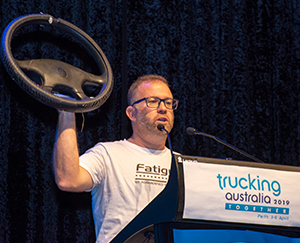
FatigueM8
Using AI and ML technologies applied to both health and driving data, KJR has developed a secure dashboard that can warn drivers and their companies of pending health and fatigue issues.